
Automation and Robotics – the Future of Logistics:
- Automation and robotics are no longer niche - they are becoming the backbone of modern logistics and manufacturing. Driven by labor shortages, rising operational costs, ecommerce, and the need for speed and precision, companies are rapidly adopting automated systems across warehouses and production facilities.
- Plug-and-play solutions, such as autonomous mobile robots, allow even mid-sized operations to implement robotics without massive upfront investment or complex WMS integration. What used to be a privilege for large-scale distribution centers is now accessible to almost any 3PL company.
- Rapid developments in automation and robotics mean that warehouse buildings need to be future ready.
Roadblocks:
Traditional mesh reinforcement is a technology developed in the 19th century, while newer fiber reinforced floors date back to the 1960ies. Neither of the two solutions provides predictability and tight tolerances, required by automation.
- Traditional concrete floors, affected by drying shrinkage, develop curling at panels edges. Grinding is a common method, causing extra costs and delays. In the worst cases delayed curling develops after the automation is already installed – causing costly repairs and disruption of operations. Due to limited size of panels and therefore increased linear meters of joints, the amount of curling is often quite substantial.
- Because of drying shrinkage, the joints between the panels are expanding – often to 20mm. Constant impacts to robots wheels result in frequent repairs and maintenance. Typical mitigation is reduction of movement speed – causing productivity loss, lower ROI and higher power consumption
- To mitigate deformations, panels are limited in size – either 6x6 saw-cuts in mesh reinforced or ~900m2 fiber reinforced floor. That makes it impossible to place large automation on a single panel. Thermal movements between the panels cause misalignments for automated systems, increasing wear and tear.
PrīmX Effectively Removes Roadblocks:
- Precision
By controlling drying shrinkage, PrīmX technology eliminates risks of later deformations. - Closed joints, uninterrupted movement
Thanks to controlled shrinkage, joints exhibit minimal opening, typically 4 to 8mm. Not only it eliminates risk of impact for robots – there is no dust and no need for costly and CO2 heavy sinusoid joints. - Large jointless panels
With shrinkage under control, panel sizes significantly larger than conventional floors – from 2.500m2 up to 10.000m2. Risk of thermal movement between panels is eliminated. - Faster time to market
No need for grinding to correct curling, caused by drying shrinkage. Floors are often ready for automation from day one, with no risk of performance degradation over time. - Lower lifetime costs
With drying shrinkage induced curling risks eliminated, with linear meters of joints reduced, with joint exhibiting little expansion – maintenance costs are reduced to absolute minimum.
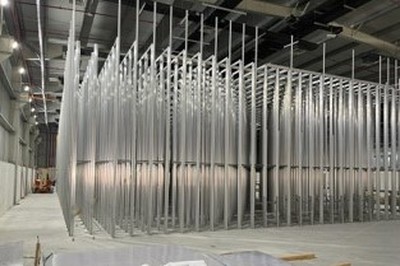 PrīmX for Cube ASRS">
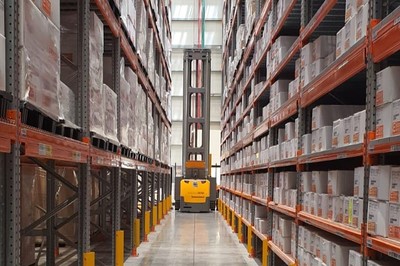 PrīmX for AGV Systems">
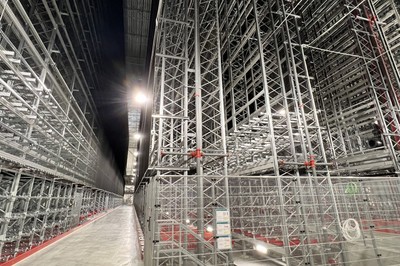 PrīmX for High-Bay Automation">
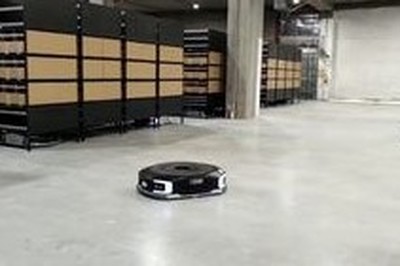 PrīmX for AMR Solutions">