Primekss veic ogekļa nanopiedevu (oglekļa nanocaurulītes, grafēns, oglekļa nanodaļiņas) testēšanu betonā projekta “Mikro-/nanostrukturēta betona kompozītmateriāla izstrāde pielietojumam būvēs ar radioaktīvā piesārņojuma risku” īstenošanas ietvaros
The research project No. 5.1.1.2.i.0/2/24/A/CFLA/004 / Implemented by SIA “VMKC”. Pētniecības projekts tiek īstenots SIA “VMKC” projekta Nr. 5.1.1.2.i.0/2/24/A/CFLA/004 ietvaros.
Time of execution / Norises laiks: 10/2024 – 10/2026
Total budget / Kopējais budžets: 163 250 EUR
EU funding / ES finansējums: 94 237.50 EUR
The aim of the project is to develop an advanced material based on micro-/nanostructured concrete with high protective barrier properties against the permeability of radioactive tritium gas and tritiated water. The application of such a material is particularly critical for ensuring the safe operation of nuclear reactors, the storage of nuclear fuel and waste, the creation of encapsulation structures for decommissioned reactors, as well as in research laboratories where there is a risk of radioactive contamination.
Projekta mērķis ir izstrādāt viedo materiālu uz mirko-/nanostrukturēta betona bāzes ar augstām aizsargbarjeras īpašībām pret radioaktīvā tritija gāzes, tritija ūdens caurlaidību. Šāda materiāla pielietošana ir īpaši svarīga, lai nodrošinātu drošu kodolreaktoru darbību, kodoldegvielas un atkritumu uzglabāšanu, izveidotu iekapsulēšanas struktūras reaktoriem, kas netiek vairs ekspluatēti, kā arī pētniecības laboratorijās, kur pastāv radioaktīvā starojuma risks.
Primekss Concrete Research Center is testing a series of concrete compositions to which carbon nanoparticles of various allotropic forms were added, such as graphene (GG), carbon nanotubes (CNT) and carbon nanoparticles (CB). The study evaluated the effect of carbon nanoparticles on the properties of fresh concrete (consistency, air content), physical properties - water absorption, density and porosity, as well as mechanical properties - compressive and flexural strength. Main conclusions:
Primekss Betona izpētes centrs veic testēšanu virknei betonu sastāvu, kam tika pievienotas dažādas alotropiskās formas oglekļa nanodaļiņas, kā piemēram, grafēns (GG), oglekļa nanocaurulītes (CNT) un oglekļa nanodaļiņas (CB). Pētījuma ietvaros tika izvērtēta nanodaļiņu ietekme uz svaiga betona īpašībām (konsistence, gaisa saturs), fizikālajām īpašībām – ūdens absorbcija, blīvums un porainība, kā arī mehāniskajām īpašībām – spiedes un lieces stiprība. Galvenie secinājumi:
Compressive strength / Spiedes stiprība
In concrete mortar samples, the largest increase in compressive strength of 5% is observed in compositions to which carbon nanoparticles are added. This is followed by compositions with carbon nanotubes of 3%. When adding graphene nanoparticles, the improvement in compressive strength is not observed and it is slightly lower than in the reference composition.
In concrete samples, the largest increase in strength of 6% is given by the addition of carbon nanotubes or graphene to the composition. No improvement is observed with the addition of carbon nanoparticles.
Betona javas paraugos lielāko spiedes stiprības pieaugumu 5% novēro sastāviem, kam pievienotas oglekļa nanodaļiņas. Pēc tam seko sastāvi ar oglekļa nanocaurulītēm 3%. Pievienojot grafēna nanodaļiņas spiedes stiprības uzlabojums nav novērojams un tā ir nedaudz zemāka nekā references sastāvam.
Betona paraugos lielāko stiprības pieaugumu 6% dod oglekļa nanocaurulīšu vai grafēna pievienošana sastāvam.
Flexural strength / Lieces stiprība
In concrete mortar samples, flexural strength decrease with the addition of carbon nanoadditives.
Betona javas paraugos lieces stiprības rādītāji samazinās visiem sastāviem pievienojot oglekļa nanopiedevas.
Properties of fresh concrete / Svaiga betona īpašības
The addition of carbon nanoparticles did not affect the flowability and air content of the concrete compositions. Oglekļa nanodaļiņu pievienošana neietekmēja betona sastāvu plūstamību un gaisa saturu.
Dimensional changes / Izmēru maiņa
In the case of all nanoadditives, the expansion at 14 days of age is achieved greater than for the reference composition: for concrete samples containing carbon nanotubes 21-40% higher expansion is observed, and 24-52% in the case of concrete samples containing graphene.
In general, the addition of carbon nanoadditives increases the shrinkage, even up to 22%, except for the composition with 0.05% carbon nanotubes, where a shrinkage of 4% less than the reference composition is observed, and 0.1% graphene, where a shrinkage of only 2% greater than the reference is observed.
Visu nanopiedevu gadījumā izplešanās 14 dienu vecumā tiek panākata lielāka nekā references sastāvam: betona paraugi, kuru sastāvā oglekļa nanocaurulītes 21-40% un 24 – 52%, kuru sastāvā grafēns.
Kopumā oglekļa nanopiedevu pievienošana palielina rukumu, varbūt pat līdz 22%, izņemot sastāvu ar 0.05% oglekļa nanocaurulīšu, kur novērojams par 4% mazāks rukums nekā references sastāvam un 0.1% grafēna, kur novērojams tikai par 2% lielāks rukums salīdzinājumā ar referenci.
Effect on microstructure / Ietekme uz mirkostruktūru
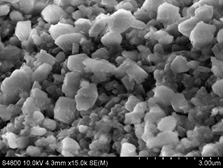
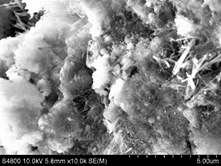
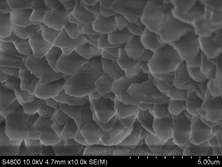
The addition of carbon nanoparticles promotes the development of different microstructural forms in the concrete structure, which can create both a denser concrete structure and the opposite, depending on the shape of the microstructures and microcrystal packing density. The figure below shows the microstructure of concrete samples containing CNT, GG, CB and the reference composition without additives.
Oglekļa nanodaļinu pievienošana veicina atšķirīgu mikrostrukturālo formu attīstību betona struktūrā, kas var veidot gan blīvāku betona struktūru, gan tieši pretēji atkarībā no mikrostruktūru formas un to pakojuma blīvuma. Zemāk attēlā betona paraugu mirkostruktūra, kur sastāvā ir CNT, GG, CB un references sastāvs bez piedevām.
|
|
|
| 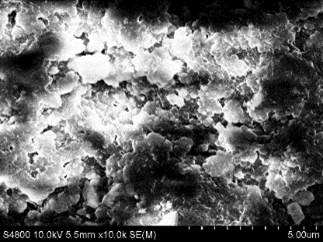 |
| a) CNT | b) GG | c) CB | d) REF |